Worried About Rejection? The Must-Check Virtual Office Checklist
If you're worried about rejection when preparing a business registration with a virtual office, we've gathered the items you must check before signing. Industry suitability, whether the address can be used, inspection readiness, contract points to verify — check them all at once.

Editor's Note While preparing to register a business with a virtual office, you'll sometimes hear stories about applications being "rejected." Why is it that some virtual offices pass while others get rejected, even though they're all virtual offices? When you sort through this question that so many people wonder about, you find that rejection has less to do with virtual offices themselves and more to do with "what conditions a particular place meets." For customers worried about rejection, we've compiled every situation in which rejection occurs! Let's lower the odds even a little and start your business smartly :)
ℹ️ Q. In what cases does rejection happen most often?
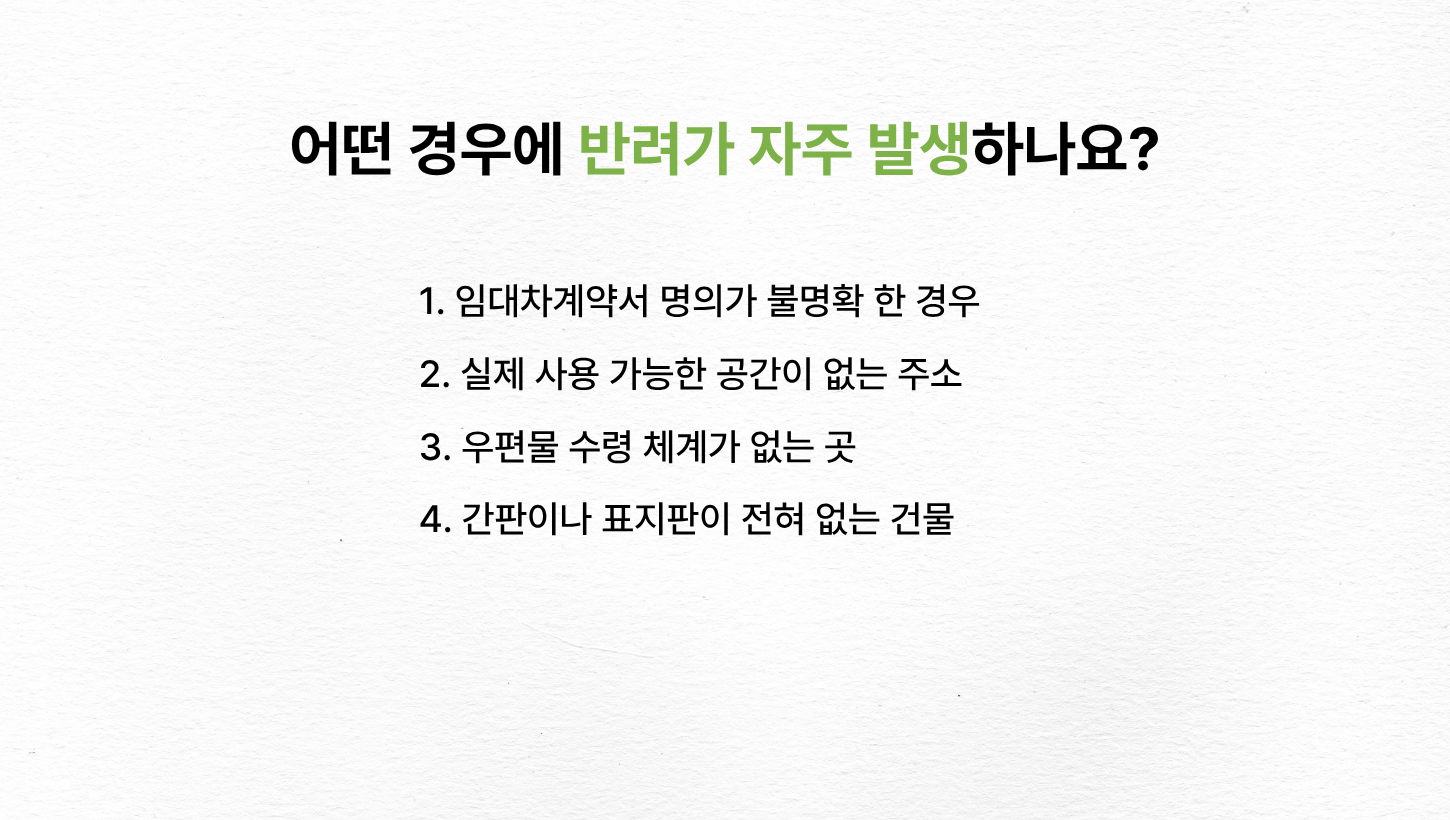
1. When the name on the lease agreement is unclear The lease agreement submitted for business registration must clearly state the name of the applicant—that is, the representative. Yet some providers reuse multiple people's names interchangeably, or arbitrarily duplicate contracts to hand out. From the tax office's perspective, such documents are seen as contracts of dubious substance, so they're highly likely to be rejected on grounds of "sharing not permitted."
2. An address with no actual usable space This is when only the address exists, with no actual office space or management system at all. The tax office conducts on-site inspections to prevent paper companies, and if the space itself can't be verified, it's naturally hard to get approval. This applies especially to cases where a residential officetel or studio apartment is registered as a business address without authorization.
3. A place with no mail-receiving system The tax office sends various notices and official documents to businesses by mail. If mail can't be received at the address or there's no management system at all, the tax office judges that genuine business operation is impossible. This too can be grounds for rejection.
4. A building with no signage or nameplate whatsoever When a tax office inspector visits the site, they check whether the building has any business signage or nameplate. If it looks just like an ordinary residence with no markings at all, the actual operation of a business becomes suspect.
ℹ️ Q. What requirements does the tax office demand for a business registration address?
The criteria the tax office uses to recognize a business address are clearer than you might think. If the following four requirements are met, you can register even a virtual office without any problem.

① The existence of actual usable space There must be a physically verifiable space. Even if it isn't in the form of a private office, it's recognized as long as it's a managed space like a shared office or coworking space.
② A lawful lease agreement A contract in the applicant's own name is essential. It must clearly state the contract period, landlord information, and address, and any arbitrarily duplicated or forged document is detected immediately.
③ A mail-receiving system There must be a system in place to receive administrative mail such as tax invoices and notices. A place with staff on site or a mailbox management system is the safe choice.
④ Business signage or a clear managing entity There must be business signage at the building entrance or inside, or at the very least a clear entity managing the space. This is the most basic item the tax office checks during an on-site inspection.
ℹ️ Q. What should I check to avoid rejection?
When choosing a virtual office, it's important to verify the "substance" before the price. When you call to inquire, asking "Can I visit to verify it?" makes it easy to tell whether an actual space exists.
The items you should check are as follows.
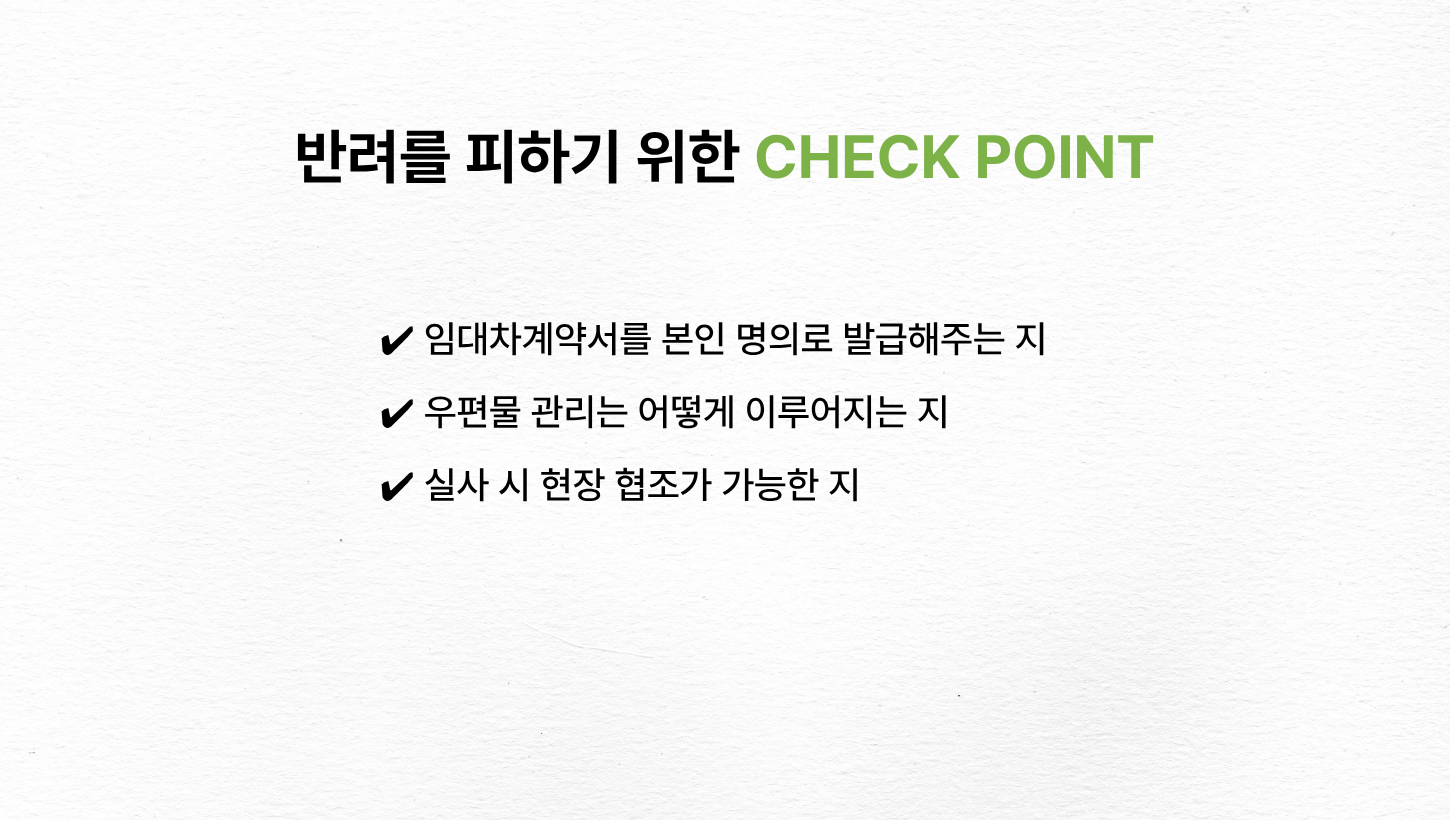
- Whether they issue the lease agreement in your own name
- How mail management is handled
- Whether they can cooperate on site during an inspection
If a tax office inspection is scheduled, one approach is to share the inspection date with the virtual office provider in advance and ask for their cooperation. A properly operated provider will be cooperative with inspections and, if needed, can offer on-site guidance or supplement documents.
⚠️ Key takeaways

- Main causes of virtual office rejection: unclear name, absence of space, inadequate mail system, missing signage
- Tax office requirements: actual space, lawful lease agreement, ability to receive mail, clear managing entity
- Rejection-prevention checkpoints: whether a visit is possible, a lease in your own name, a mail management system, willingness to cooperate with inspections
The problem isn't virtual offices themselves—what matters is which virtual office you choose. A place that's properly registered and equipped with actual space and a management system has no trouble meeting the tax office's standards.
Conversely, if you use an illegal proxy provider that only hands over documents, the risk of rejection is high no matter how cheap it is. Business registration is the very first step of your business. To avoid the hassle of unnecessary rejection and reapplication, the surest way is to choose an address that meets the requirements from the start.
